SEARCH
RESEARCH NEWS

JULY 2010

You can't fight violence with violence: The psychology of vengeance explains much about the state of the world and suggests the "war on terror" can never succeed, says Metin Basoglu...More

Read New Scientist article.

AUGUST 2009

Earthquake survivors can be cost-effectively treated by delivering a self-administered behavioural treatment....More

JUNE 2009

Speaking up about the unspeakable. Editorial on Basoglu (2009)...More

JUNE 2009

Profane research versus researching the profane: Commentary on Basoglu (2009). Miles, Steven H....More

JUNE 2009

Cruel, inhuman, and degrading treatment is more traumatic than physical torture...More

March 2009

Earthquake survivors can be effectively treated using a self-help manual...More

March 2007

Study finds no distinction between torture and cruel, inhuman and degrading treatment...More

Read related New York Times article.

February 2007

Earthquake Simulation Treatment found highly effective in reducing earthquake trauma...More

Read related BBC News article.

December 2006

DABATEM raises questions about usefulness of torture rehabilitation programs...More

Read ensuing debate in British Medical Journal.

February 2005

A single treatment session leads to high rates of recovery from earthquake trauma...More

Read APA Monitor on Psychology comment on this intervention.

DABATEM NEWS

NEW BOOK

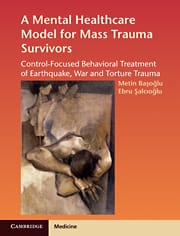
A MENTAL HEALTHCARE MODEL FOR MASS TRAUMA SURVIVORS: Control-Focused Behavioral Treatment of Earthquake, War, and Torture Trauma

by Metin Basoglu and Ebru Salcioglu to be published by Cambridge University Press in February 2011. Click here for information and ordering options.

CLICK HERE FOR TABLE OF CONTENTS

DABATEM LAUNCHES NEW TREATMENT PROJECT WITH ASYLUM-SEEKERS AND REFUGEES

DABATEM has recently launched a new project to develop a brief and effective behavioral treatment for traumatized asylum-seekers and refugees. Pilot studies show that Control-Focused Behavioral Treatment delivered in 4 to 8 weeks is highly effective in reducing traumatic stress and depression in asylum-seekers. After testing the intervention in a clinical trial, work will involve development of a self-help manual for war and torture survivors and a treatment delivery manual for care providers.

METIN BASOGLU'S COMMENT ON NEW SCIENTIST ARTICLE

"BEYOND TORTURE: THE FUTURE OF INTERROGATION"
New Scientist, March 8, 2010

CLICK HERE FOR COMMENT

KEYNOTE ADDRESS

Basoglu M. A self-help model of mental health care in war, torture, and natural disaster survivors. Presented at the 11th European Conference on Traumatic Stress. Oslo, Norway, June 14-18, 2009.

SLIDES AVAILABLE HERE

SYMPOSIUM 1

Basoglu M. What is torture? - A contextual analysis of captivity experiences and critique of current debate over definition of torture. Presented at the 11th European Conference on Traumatic Stress. Oslo, Norway, June 14-18, 2009.

SLIDES AVAILABLE HERE

SYMPOSIUM 2

Basoglu M. Current issues and controversies in rehabilitation of torture survivors- Refelections on past work and prospects for brief treatment. Presented at the 11th European Conference on Traumatic Stress. Oslo, Norway, June 14-18, 2009.

SLIDES AVAILABLE HERE

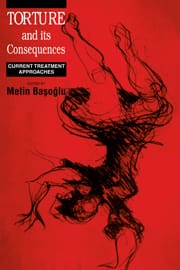
TORTURE AND ITS CONSEQUENCES: CURRENT TREATMENT APPROACHES

New paperback version available from Cambridge University Press

DABATEM IN WORLD MEDIA

Below are some selected news about DABATEM's work.

CLICK HERE TO SEE ALL OTHER NEWS

NEWS ABOUT
TORTURE / WAR WORK


NEWS ABOUT
EARTHQUAKE WORK


ICBRT / DABATEM’s mission

DABATEM is an independent research center in Istanbul with expertise in behavioral treatment of anxiety disorders, including posttraumatic stress disorder. It is affiliated with the Trauma Studies at the Institute of Psychiatry, King’s College London. Both DABATEM and Trauma Studies are founded and headed by Metin Basoglu, MD, PhD.

DABATEM conducts research into mental health effects of mass trauma events, such as wars, natural disasters, political violence, and torture. Its aims are:

  • To promote a better understanding of various issues in the field of psychological trauma that are of significance to mental and public health professionals, social and political scientists, human rights workers, international law experts, policy makers, and governmental and nongovernmental organizations concerned with care of mass trauma survivors.
  • To develop a new mental health care model for mass trauma survivors based on self-help principles
  • To promote evidence-based approach in the field and contribute to the development of expertise in psychological trauma, particularly in developing countries.

Why the need for a better understanding of mass trauma?

The mental health effects of wars, torture, and natural disasters raise important social, political, moral, human rights, and legal issues. The current debate in the U.S. about the definition of torture is a case in point. There are many other unresolved issues concerning refugees, internally displaced people, asylum-seekers, and torture survivors. These issues can be effectively addressed only with an adequate understanding of how such events affect people. This requires an evidence-based approach, which has been largely lacking due to the difficulties in conducting research in this area and relative lack of appropriate research methodologies. DABATEM undertakes research to address various important issues and promotes an evidence-based approach in this field by developing research methodology to facilitate study of mass trauma.


Why the need for a new mental health care model based on self-help?

  • The political developments of the last two decades have resulted in an increase in wars, regional conflicts, and political violence of all kinds around the world. Traumatic stress is thus an increasingly serious public health problem, particularly among the already impoverished and disadvantaged populations of third world countries. Developing countries are often the ones that are most severely affected by wars, political violence, and natural disasters.

  • Experience with large-scale disasters is limited in the western world. Currently available treatments are of limited value in developing countries because (a) they are too long for post-disaster circumstances where large numbers of survivors need help and (b) their dissemination requires trained therapists – a rather scarce resource in developing countries. Thus, such countries need to develop a cost-effective approach to their problem, rather than uncritically adopting western treatments in survivor care.

  • Many survivors recover from stress without any treatment, possibly reflecting an evolutionarily determined resilience in humans against traumatic stress. This implies that the right approach to trauma is one that focuses on resilience, not on pathology. The latter characterizes most western treatments.

  • Self-help interventions closely parallel (and possibly enhance) natural processes in recovery from trauma and are thus likely to be highly effective. A self-help approach is essential for developing countries, given their socio-economic and political realities.

Background to DABATEM’s work – Theory and evidence base

In the early 1990s we proposed a theoretical formulation of traumatic stress in torture survivors, based on experimental learning theory models of anxiety in animals. We hypothesized that (a) unpredictability and uncontrollability of stressors plays an important role in traumatic stress and (b) interventions that enhance sense of control increase resilience and reverse the effects of trauma. The first part of this hypothesis was confirmed by a series of studies with torture survivors and later by a study of more than 2,000 war survivors in former Yugoslavia countries, including combat veterans, torture survivors, internally displaced people, refugees, and people exposed to aerial bombardment. Based on this evidence, we developed a behavioral intervention designed to reduce traumatic stress by enhancing sense of control over stressors. This was a largely self-help based intervention involving mainly instructions for self-exposure to feared trauma-related situations.


The 1999 earthquakes in Turkey allowed us an opportunity to test this Control-Focused Behavioral Treatment in natural disaster survivors. A series of treatment studies showed that the treatment is highly effective in reducing traumatic stress, even when delivered in a single session. Preliminary evidence suggested that the treatment could be effectively delivered through media other than a therapist, such as a self-help manual. In addition, a highly effective Earthquake Simulation Treatment was developed, designed to enhance resilience against the traumatic effects of earthquakes by increasing sense of control over simulated earthquake tremors. These interventions were used as part of a mental health care model that was tested with more than 5,000 survivors using an Outreach Treatment Delivery Program. Other treatment dissemination methods included a Treatment Delivery Manual designed to guide lay therapists in delivering treatment in post-disaster circumstances where trained therapists are not available. We are now at a stage where we can begin to consider the idea of disseminating treatment on a much larger scale through mass media channels.


Our work in the last 20 years included more than 40 research projects, which culminated in a large database involving information on more than 2,000 variables in about 15,000 survivors. This database – possibly the largest of its kind in mass trauma survivors – is fairly unique for several reasons:

  • It represents the largest body of empirical evidence to date on the applications of experimental learning theory models of traumatic stress in humans. Because this theory deals with evolutionarily determined ‘universals’ in the behavior of organisms, its applications in humans have wide cross-cultural applicability. Furthermore, its focus on behavioral strategies for coping with unpredictable and uncontrollable stressors makes it a highly useful paradigm in developing effective self-help interventions for traumatic stress.

  • The data allow comparisons among different trauma groups because all our studies were based on the same methodology. This increases the generalizability of findings.

  • The database involves a wide range of studies, including descriptive / phenomenological studies, field surveys / epidemiological studies, experimental case studies, and uncontrolled and randomized controlled trials of various treatments. This allows testing of various hypotheses relating to mechanisms of traumatic stress, which is essential in developing effective interventions.

  • The detailed nature of the data allows us to examine a wide range issues that are of significance to legal professionals, international law experts, social and political scientists, and human rights workers. Such data are quite valuable, because of the difficulties in conducting high-quality research with survivors of war and torture trauma.

Why this website?

This website is designed to facilitate dissemination of the knowledge gained from 20 years of work. It contains a summary of all our trauma-related work to date with a focus on our mental health care model. Introductory information is provided on the various components of this model, including the new behavioral treatments, assessment instruments, and treatment dissemination tools. More information about various theoretical and practical issues concerning this model is provided in Frequently Asked Questions.


NEW BOOK ON TREATMENT OF EARTHQUAKE, WAR, AND TORTURE TRAUMA

The information in this website will be presented in more detail in our forthcoming book on A Mental Healthcare Model for Mass Trauma Survivors: Control-Focused Behavioral Treatment of Earthquake, War, and Torture Trauma that will be published by Cambridge University Press in February 2011. See TABLE OF CONTENTS


NEW TREATMENTS

SINGLE-SESSION BEHAVIORAL TREATMENT

A new behavioral treatment designed to enhance sense of control over traumatic stressors. Particularly useful when regular treatment attendance is not possible in post-disaster circumstances.


Achieves generalized improvement in 80% of the cases.

EARTHQUAKE SIMULATION TREATMENT

Earthquake simulator specifically designed to reduce traumatic stress by enhancing sense of control over earthquake tremors.

An imaginative depiction of Earthquake Simulation Treatment by José Carlos Fernandes - a well-known Portuguese artist Courtesy of JCF

Associated article in Portuguese newspaper EXPRESSO.

SELF-HELP MANUAL

A highly structured self-help manual designed for use as a stand-alone tool without therapist contact or as an adjunct to therapist-delivered treatment.

TREATMENT DELIVERY MANUAL

A highly structured Treatment Delivery Manual designed for use by untrained professional or lay therapists in post-disaster settings where trained therapists are not available.
ASSESSMENT TOOLS

SCREENING INSTRUMENTS

Screening Instrument for Traumatic Stress in Survivors of Earthquakes

A validated diagnostic screening instrument specifically designed for earthquake survivors.'

Free download

Turkish versionEnglish version

INTERVIEW FORMS

Semistructured Interview for Survivors of Torture - SIST

Semistructured Interview for Survivors of War - SISOW

Semistructured Interview for Survivors of Earthquakes - SISE

ONLINE ARTICLE

Deprem, savaş ve terörizm gibi kitlesel felaketler için bir ruh sağlığı modeli

A mental health care model for mass trauma events such as earthquakes, wars, and terrorism

A detailed overview of DABATEM's mental health care model and guidelines for implementation
Available (in Turkish only) upon request by email.

Abstract TurkishEnglish

Last updated : July 18, 2010
ICBRT / DABATEM Siraselviler Cad. Meselik Sok. 26 / 5 Beyoglu, Istanbul 34433 Tel: +90-212-251-0084 Fax: +90-212-245-2385 dabatem@dabatem.org

Copyright © 2007 ICBRT / DABATEM All rights reserved

gofethiye

hotelsinfethiye